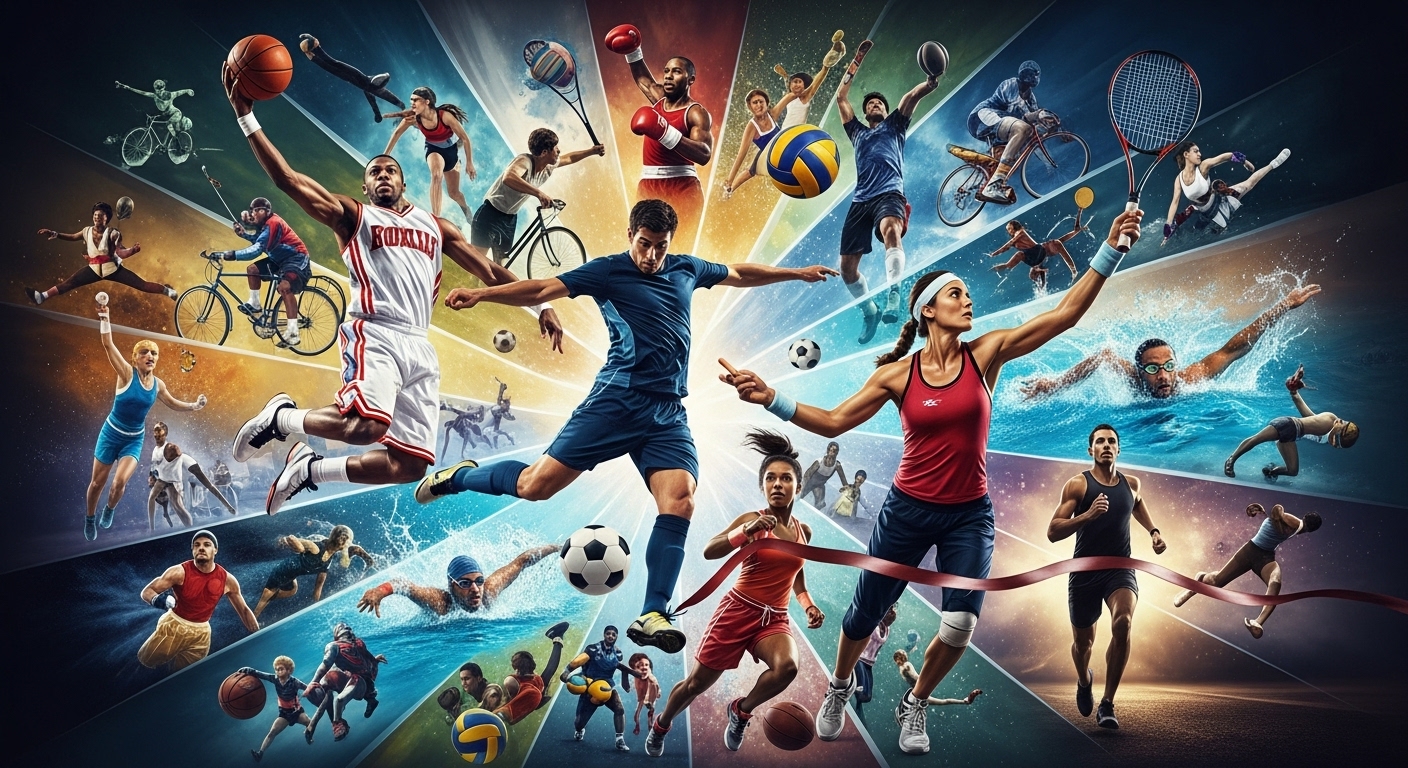
Sports have been an integral part of human culture for centuries, evolving from simple tribal games to the global spectacles we witness today. Whether it’s the Olympic Games, a local football match, or a tennis Grand Slam, the influence of sports on our social and cultural fabric is undeniable. In this blog post, we’ll take a closer look at the fascinating evolution of sports, from their humble beginnings to the massive industries they are today.
The Birth of Sports: Ancient Civilizations and Early Beginnings
The concept of sport can be traced back to ancient civilizations, where physical contests were often linked to religious rituals or celebrations. In ancient Greece, for example, the Olympic Games were held every four years to honor the gods, with events like running, wrestling, and chariot races. Similarly, in ancient Egypt, people played a variety of ball games, some of which closely resemble modern-day sports like soccer and basketball.
These early forms of sports were often simple, but they laid the foundation for the competitive, rule-based games we enjoy today. The key aspect that made these games so significant was their role in fostering community, honoring gods, and testing physical prowess.
The Middle Ages: Sports as Training and Entertainment
The Middle Ages saw the development of several sporting activities, many of which served dual purposes: training for war and entertainment. In medieval Europe, jousting, archery, and swordplay were common, often practiced by knights as a way to hone their combat skills. The notion of tournaments, where knights competed for honor and rewards, can be seen as a precursor to the modern-day sports competition.
At the same time, games like football (soccer) and early forms of ball games became popular among the common people, though these were less formalized and more chaotic. While there were no official leagues or governing bodies, these games fostered community interaction and provided an outlet for entertainment.
The Renaissance and the Birth of Modern Sports
The Renaissance period in Europe was a time of great cultural and intellectual growth, and this era also marked the formalization of many modern sports. The invention of more structured rules for games like tennis, cricket, and football took place in this period. The establishment of the first cricket club in England in the 16th century is considered one of the first instances of organized sport.
As society began to shift from agrarian economies to more urbanized, industrialized settings, organized sports took on a greater importance as a way to channel the energy of the growing population. This led to the creation of clubs, leagues, and formal competitions, creating the foundation for modern professional sports.
The Industrial Revolution: The Rise of Professional Sports
With the onset of the Industrial Revolution, sport underwent a dramatic transformation. Advances in technology, transportation, and communication allowed people to travel greater distances, bringing athletes together from around the world. It was during this time that sports like football, baseball, and boxing began to gain mass popularity.
The establishment of leagues and professional teams brought with it the commercial aspect of sports. The first professional baseball league was founded in the United States in the 1870s, and shortly after, European football leagues began to form, setting the stage for global competitions.
The Industrial Revolution also had a profound impact on how sports were consumed by the public. Spectators could now attend games in larger numbers, and sports media began to emerge, with newspapers and later radio and television broadcasting games to a wide audience. This helped fuel the growth of sports into the entertainment juggernauts they are today.
The Globalization of Sports: A Worldwide Phenomenon
The 20th century witnessed the globalization of sports. The creation of the Olympic Games, the spread of football through European colonialism, and the rise of global sports media have all contributed to making sports a worldwide phenomenon. The 1992 Summer Olympics in Barcelona, for instance, marked a turning point when athletes from former Eastern Bloc countries, previously excluded due to political tensions, were able to participate freely.
Today, sports are more accessible than ever. The internet and social media have enabled fans to connect with their favorite teams and athletes across borders, and international competitions like the FIFA World Cup and the Olympics bring people together to celebrate athletic achievement, regardless of nationality.
The Impact of Sports on Society
The influence of sports extends far beyond the field or arena. They have the power to unite people from diverse backgrounds, foster a sense of community, and provide an escape from daily life. Sports teach important life lessons such as teamwork, perseverance, and discipline, and they inspire millions of people to lead healthier, more active lifestyles.
On a more societal level, sports also serve as a platform for social change. Athletes like Muhammad Ali, Jackie Robinson, and more recently, Colin Kaepernick, have used their positions to challenge social injustices and promote activism. In this sense, sports are not just entertainment; they are a mirror of society, reflecting its values, struggles, and triumphs.
The Future of Sports: Innovation and Inclusion
Looking ahead, the future of sports promises even greater innovation and inclusivity. Technology is already playing a significant role in enhancing the viewing experience, with virtual reality, enhanced statistics, and real-time analytics changing how fans engage with their favorite sports. Esports, or competitive video gaming, is another area where innovation is thriving, offering new forms of entertainment and competition that attract younger audiences.
Moreover, there is a growing emphasis on inclusivity, with more opportunities for women and disabled athletes to participate at all levels. The rise of women’s professional leagues in soccer, basketball, and other sports is a testament to the increasing recognition of women in sports, and the Paralympic Games continue to highlight the incredible achievements of athletes with disabilities.
Conclusion: Sports as a Universal Language
From their ancient origins to their modern-day global appeal, sports have evolved into a universal language that transcends borders, cultures, and languages. They serve not only as a source of entertainment and competition but as a means to bring people together, challenge societal norms, and inspire future generations.
As we continue to push the boundaries of athletic achievement and technological innovation, one thing is clear: sports will remain a fundamental part of human life, reflecting our highest aspirations and our shared humanity. Whether you’re a professional athlete or a casual fan, sports offer something for everyone—a reminder of the power of movement, competition, and community.